


Remember the first time you stood at the end of a runway, feeling the roar of a B747 as it thundered overhead? Or perhaps it was the elegant silhouette of an A380 that first captured your imagination. That moment stays with you—and eventually, it leads you here, ready to hold a piece of that magic in your hands.
But then you open an online store and see: 1:400, 1:200, Gemini Jets, Phoenix, NG Models, JC Wings... Suddenly it feels overwhelming. Don't worry. Every seasoned collector started exactly where you are now. I've been collecting for over a decade, and in this guide, I'll walk you through everything you need to know to make your first purchase with confidence.
Why Diecast Aircraft Models?
Diecast models aren't just toys—they're precision-crafted miniatures that capture aviation history in your hands. Made primarily from zinc alloy (often called "zamak"), these models offer:
- Durability that lasts for decades
- Authentic airline liveries with accurate logos and markings
- Impressive detail at every scale
- Collector value that can appreciate over time
Whether you're drawn to commercial airliners, military jets, or vintage classics, diecast models let you build a personal aviation museum right in your home.
The Great Debate: 1:400 vs 1:200
This is the first decision every collector faces—and there's no single "right" answer. The best choice depends on your space, budget, and collecting goals.
1:400 Scale – The Collector's Standard

1:400 scale is the most popular choice among serious airline collectors—and for good reason.
Pros:
- Compact size – A typical 1:400 model is 5-7 inches long, letting you build an impressive fleet without needing a warehouse.
- Affordable – Most models range from $15-100, meaning you can buy 3-4 for the price of one 1:200.
- Massive variety – Thousands of airline/livery combinations exist, including rare and obscure aircraft.
- Easy to display – Fits nicely on bookshelves, desks, or dedicated display cases.
- Better for "fleet building" – Perfect if you want to collect every 737 operator or all of British Airways' liveries.
Cons:
- Less detail – At this scale, some fine details like landing gears details are harder to reproduce.
- Smaller presence – Doesn't have the same "wow factor" as larger models on first glance.
Best for: Collectors who want variety, have limited space, or are budget-conscious. If you're the type who wants to own 50 different aircraft, 1:400 is your path.
1:200 Scale – The Display Piece

1:200 scale is where models become true conversation starters. At roughly 10-15 inches long, these have serious presence.
Pros:
- Incredible detail – Panel lines, cockpit windows, landing gear mechanisms—all more visible and refined.
- Museum-quality presence – These feel like genuine artifacts, not collectibles.
- Hefty, premium feel – The weight alone tells you this is something special.
- Better for "hero pieces" – Perfect for that one aircraft you absolutely love.
Cons:
- Expensive – Typically $100-300+, sometimes more for limited editions.
- Space-hungry – A few models can fill a shelf; a dozen need serious display planning.
- Less variety – Fewer liveries and aircraft types available compared to 1:400.
- Storage challenges – The boxes alone take up significant space.
Best for: Collectors who want a few stunning centerpiece models, have dedicated display space, and prioritize impact over quantity.
Quick Comparison
| Factor | 1:400 Scale | 1:200 Scale |
|---|---|---|
| Price range | $15-100 | $100-300+ |
| Size (B747) | ~6.5 inches | ~13 inches |
| Detail level | Good | Excellent |
| Variety | Massive | Limited |
| Space needed | Minimal | Significant |
| Best for | Fleet building | Statement pieces |
Understanding the Brands: Who Makes What?
Here's where many beginners get confused—and where collector forums come alive with debate. Let me break down the major players in simple terms.
The Premium Player: NG Models
NG Models has earned a reputation as the current quality leader, especially in 1:400 scale. Their moulds are exceptionally accurate, printing is crisp, and quality control is consistent.
- Strengths: Narrowbody aircraft (737, A320, 757), exceptional detail, durable construction.
- Weaknesses: Higher price point, some moulds (like their 777) have minor accuracy debates.
- Best for: Collectors who want the absolute best and are willing to pay for it.
Verdict: "NG are certainly the best, but they do cost slightly more."
The Industry Standard: Gemini Jets
Gemini Jets is often considered "the official" 1:400 diecast brand—the one airlines themselves turn to when they need models made. They have extensive licensing agreements with carriers worldwide.
- Strengths: Huge variety, official airline partnerships, widely available.
- Weaknesses: Mould quality varies significantly by aircraft type; older moulds show their age.
- Best for: Collectors focused on modern US airlines and mainstream releases.
Note: Gemini's 737 MAX, 777, and 787 moulds (shared with JC Wings) are quite good. Their narrowbody moulds (737-700/800) are less impressive.
The Workhorse: JC Wings
JC Wings actually manufactures many of Gemini Jets' models, but they also release their own versions. Their moulds are often identical to Gemini's, though some collectors prefer JC's printing quality.
- Strengths: Excellent 777-300ER mould, wide range of releases, good value.
- Weaknesses: Quality consistency can vary; some models use more plastic than competitors.
- Best for: Collectors who want Gemini-quality with slightly different release choices.
The Value Player: Phoenix Models
Phoenix Models offers a broad catalog at competitive prices, making them a popular choice for budget-conscious collectors.
- Strengths: Huge variety, releases models others won't touch, affordable.
- Weaknesses: Mould quality is often a step behind NG and Panda; some releases have printing issues.
- Best for: Collectors on a budget, or those seeking rare airline/aircraft combinations.
Collector wisdom: "If you have much money: NG Model. If you don't have much money: Phoenix Models."
The Rising Stars: Panda Models & Aviation400
Panda Models has emerged as a serious quality contender, with excellent 767 and MD-11 moulds. They also manufacture for several other brands.
Aviation400 focuses on widebody aircraft with premium features like magnetic landing gear and spinning engine fans.
Brand Reputation at a Glance
| Brand | 1:400 Quality | 1:200 Quality | Price | Best For |
|---|---|---|---|---|
| NG Models | ⭐⭐⭐⭐⭐ | N/A | $$$ | Accuracy-focused collectors |
| Gemini Jets | ⭐⭐⭐ | ⭐⭐⭐⭐ | $$ | Mainstream airlines, US market |
| JC Wings | ⭐⭐⭐⭐ | ⭐⭐⭐⭐ | $$ | Widebodies, 777 fans |
| Phoenix | ⭐⭐⭐ | ⭐⭐⭐ | $ | Budget, rare combos |
| Panda | ⭐⭐⭐⭐ | N/A | $$ | 767/MD-11 collectors |
A Deeper Look: Mould Quality Matters More Than Brand
Here's something experienced collectors learn quickly: don't focus on brands—focus on moulds. Every manufacturer has excellent moulds and mediocre ones. For example:
- Phoenix makes a great A380 and 777-300ER but their 747 is widely considered the worst in 1:400 scale.
- NG's narrowbody moulds (737, A320, 757) are exceptional, but their 777 has passionate defenders and critics alike.
- JC Wings and Gemini share many moulds, so a JC 787 and Gemini 787 will be nearly identical.
The key takeaway? Research specific aircraft types before buying, rather than swearing loyalty to any single brand.
3 Common Mistakes Beginners Make
Mistake #1: Buying Cheap "Toy" Models
Not all model airplanes are created equal. True diecast models use metal construction and precision tampo printing. Cheap alternatives often have wrong proportions, blurry liveries, flimsy plastic construction, and missing landing gear.
The fix: Stick to reputable brands (Gemini, NG, JC, Phoenix, Panda) and buy from authorized dealers.
Mistake #2: Ignoring the "Gear Issue"
Landing gear on 1:400 models is delicate. Some manufacturers (like NG) focus on finely detailed, non-moving gear that's more durable. Others prioritize moving parts that can break.
The fix: If you plan to handle models frequently, consider brands with more robust gear construction. If they're strictly display pieces, moving gear adds realism.
Mistake #3: Forgetting About Future Growth
Many beginners buy one model without considering where their collection might go. Six months later, they're out of space or frustrated by inconsistent scales.
The fix: Think ahead. If you might want a large collection someday, start with 1:400. If you'll only ever buy a handful of favorites, 1:200 makes more sense.
How to Make Your First Purchase: A Step-by-Step Approach
- Answer these questions: How much space? Budget? How many models? What aircraft/livery speaks to you?
- Start with one model – the one that made you fall in love with aviation.
- Research the specific release on forums like Diecast Aircraft Forum (DA.C) or Yesterday's Airlines.
- Buy from a reputable seller with clear photos, good return policies, and positive community feedback.
Our Picks: Great "First Models" for Beginners
Here are some curated suggestions to get you started. (Click on any model to view it in our store.)
Best 1:400 Starter Models
Phoenix 1:400 British Airways B747-400
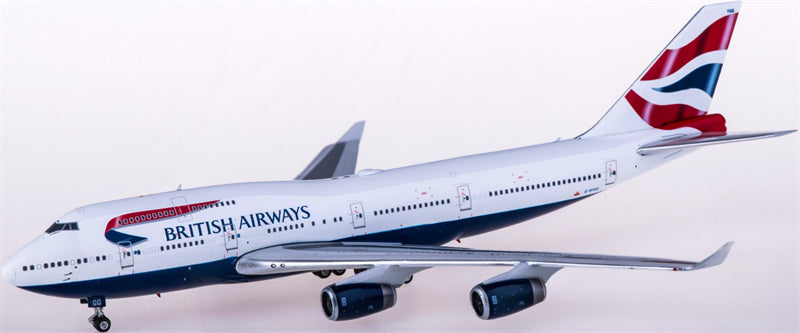
The "Queen of the Skies" in one of the world's most iconic liveries. A perfect introduction to why we love this hobby.
View Model →JC Wings 1:400 Lufthansa A380
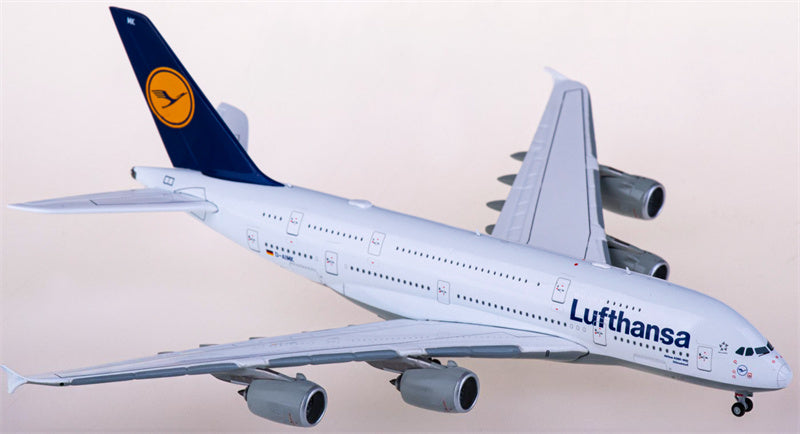
The world's largest passenger aircraft, beautifully rendered by one of today's best manufacturers.
View Model →Geminijets 1:400 Delta Air Lines B737-800

Affordable, widely available, and a great way to test your interest without a big investment.
View Model →Display and Care Tips
- Keep out of direct sunlight to prevent fading.
- Dust regularly with a soft brush or microfiber cloth.
- Handle by the fuselage, not delicate parts like landing gear.
- Save the original boxes – they're essential if you ever move or sell.
- Consider a glass display cabinet to protect from dust while showcasing your collection.
The Bottom Line
There's no wrong answer when starting your collection. The right scale is the one that fits your space, your budget, and your passion.
If you're still unsure, here's my advice: start with one 1:400 model. It's affordable, easy to display, and will quickly tell you whether you catch "the bug." If you find yourself constantly looking at it, wanting more, and dreaming of your next purchase—congratulations, you're officially a collector.
And if you eventually add a 1:200 model alongside it? Even better. Many of us collect both.